

You know the feeling. It is not just tiredness. Tiredness is what happens after a long run or a day of moving furniture. Tiredness is physical. It can be cured by a solid eight hours of sleep.
This is different.
This is a deep, marrow-level exhaustion that sits in your chest. It is a creeping cynicism about the very company you built. It is the inability to care about a problem that, three months ago, would have fired you up.
So, you do what everyone tells you to do. You take a vacation.
You go to a beach. You try to leave your laptop in the hotel room. You spend a week staring at the ocean, drinking margaritas, and trying to force yourself to relax.
Then you fly home.
The moment you open your inbox on Monday morning, the feeling returns. It is instantaneous. The dread is back, heavier than before. You realize that the vacation did not fix anything. It just hit the pause button on a movie you hate watching.
This is the vacation fallacy.
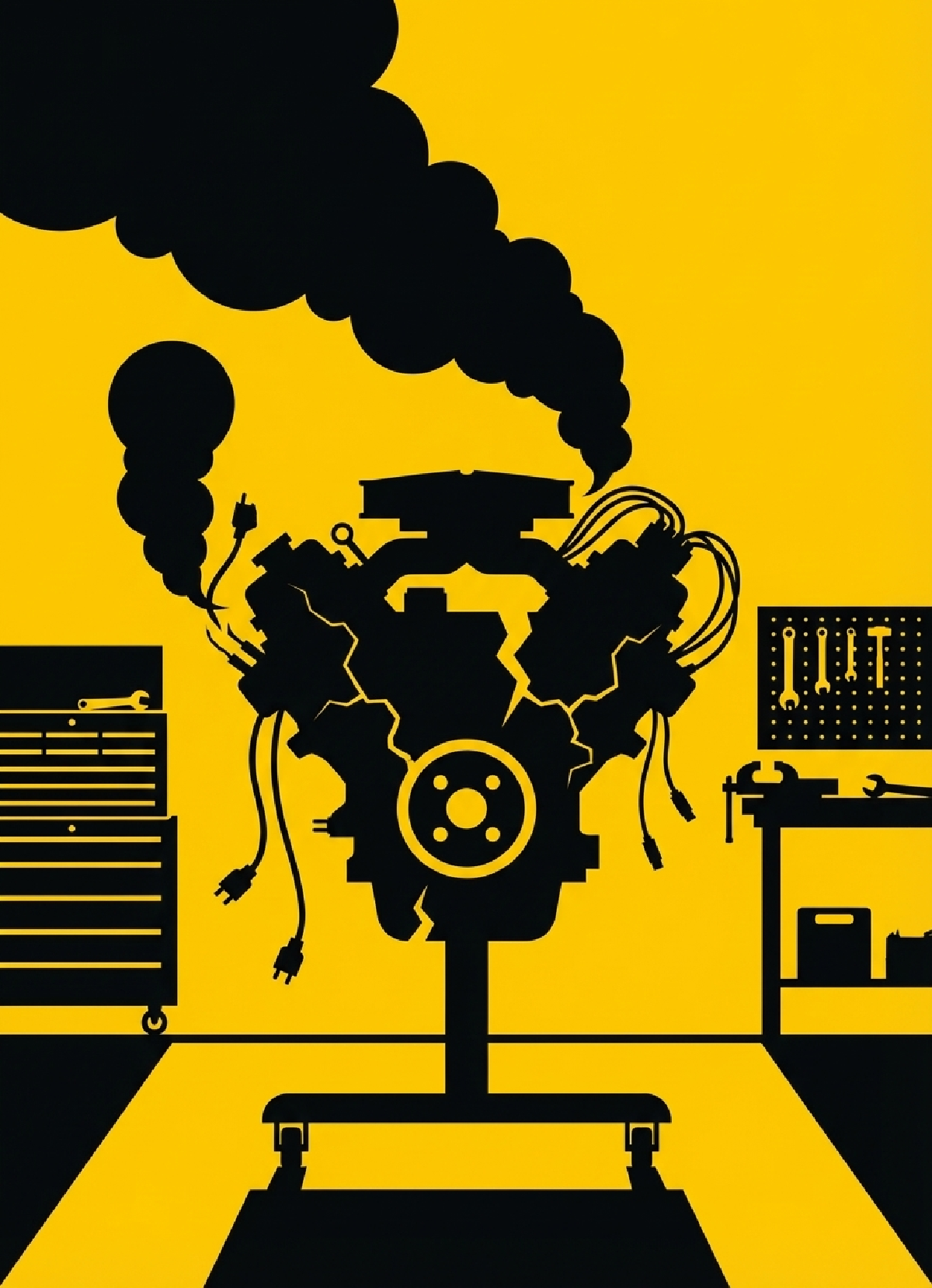
We treat burnout like a battery that just needs to be recharged. We assume that if we unplug for a few days, the charge will return to 100 percent. But burnout is not a battery problem. It is an engine problem.
If your car engine is smoking and making a grinding noise, parking it in the garage for a week does not fix it. When you turn it back on, it is still broken.
To address founder burnout, we have to look under the hood. We have to look at the biology of stress and the structure of your work. We need system upgrades, not just downtime.
The Biology of Allostatic Load
#To solve this, we need to understand the science of what is happening to your body.
Scientists use a term called ‘allostatic load.’ This refers to the cumulative wear and tear on the body that accumulates as you are exposed to repeated or chronic stress.
When you are running a business, you are constantly triggering your sympathetic nervous system. This is the fight or flight response. Your body releases cortisol and adrenaline to help you handle a crisis.
This is useful for short bursts. It helps you crush a pitch meeting or handle a server outage.
But when the crisis never ends, the system breaks down. Chronic cortisol exposure damages the hippocampus, the part of the brain responsible for memory and emotional regulation. It literally rewires your brain to be more anxious and less capable of complex problem solving.
This is why you feel foggy. This is why you snap at your co-founder.
The vacation fails because it does not address the allostatic load accumulating during the other fifty-one weeks of the year. You cannot fix chronic damage with acute rest.
Active Recovery vs. Passive Rest
#When founders try to rest, they often choose passive methods. They binge-watch Netflix. They scroll through social media. They sleep until noon.
While sleep is vital, passive consumption is not the same as recovery.
Neuroscience suggests that the brain needs ‘active recovery’ to truly reset. Active recovery involves engaging in an activity that requires focus but uses a different part of the brain than your work.
Think about a founder who takes up rock climbing, pottery, or Brazilian Jiu-Jitsu.
When you are scaling a rock wall, you cannot be thinking about your cash flow statement. If you lose focus, you fall. This forced focus breaks the loop of rumination.
Rumination is the enemy. It is the background processing that keeps your stress levels high even when you are technically off the clock. Passive rest allows rumination to continue in the background. Active recovery demands presence.
We have to ask ourselves: Do we have a hobby that forces us to be present? Or are we just numbing ourselves with screens until we pass out?
The Control-Demand Mismatch
#Organizational psychology offers another framework for understanding burnout: the Job Demands-Resources model.
This theory suggests that high demands (long hours, pressure, complexity) do not inherently cause burnout. High demands cause burnout only when they are paired with low control or low resources.
Founders often feel they have total control. They are the boss, right?
But in reality, many founders feel trapped. They are beholden to investors. They are slaves to customer demands. They are putting out fires they did not start.
When you feel like things are happening to you rather than by you, burnout accelerates.
The solution here is not necessarily to work less. It is to regain agency.
This might mean firing a toxic client who drains your energy. It might mean delegating the administrative tasks that make you feel helpless. It might mean resetting expectations with your board.
Increasing your sense of autonomy is often more restorative than a day off.
Closing the Open Loops
#Another major contributor to cognitive fatigue is the Zeigarnik effect. This psychological phenomenon states that people remember uncompleted or interrupted tasks better than completed ones.
Your brain holds open loops in a state of suspended tension.
Founders live in a world of open loops. The fundraising round that hasn’t closed. The product feature that is buggy. The employee who is underperforming.
These open loops drain your mental RAM. You are walking around with fifty tabs open in your brain’s browser.
To prevent burnout, you need a system for closing loops. This does not always mean finishing the task. It can simply mean capturing it.
This is why David Allen’s ‘Getting Things Done’ methodology is so popular among high performers. By writing a task down in a trusted system, you tell your brain it is safe to let go of it.
If you do not have a rigorous capture system, your brain will try to hold onto everything. That effort costs energy.
The Isolation Factor
#We discussed the loneliness of leadership in other articles, but it is worth noting here as a primary driver of burnout.
Human beings are social regulators. We use other people to help regulate our own nervous systems. This is called ‘co-regulation.’
When you are stressed, a five-minute conversation with a friend who validates your feelings can lower your cortisol levels.
However, founders often isolate themselves when things get hard. They feel ashamed of their struggles. They do not want to burden others.
This isolation removes the primary biological mechanism we have for stress management.
Building a circle of peers is not just for networking. It is a biological necessity for survival. You need people who can help you down-regulate your nervous system when the pressure gets too high.
Redesigning the Machine
#If you are feeling burned out, do not book a flight to Hawaii. Not yet.
Look at your week. Look at the data.
Where are you losing agency? Where are the open loops draining your battery? Are you engaging in active recovery, or just numbing out?
Burnout is a signal. It is a dashboard light telling you that the current system is unsustainable.
You are building a company that you hope will last for ten years or more. You cannot run a ten-year marathon at a sprint pace.
You have to redesign the machine. You have to build a structure that allows for high performance without high damage.
This is the work. It is not as glamorous as a product launch. But without it, there will be no product launch, because there will be no founder left to lead it.
But… do take vacations. They help.