

You have likely been there before.
It is late on a Friday. You are trying to close a deal with a new client or onboard a critical vendor. They send over a PDF. It is fourteen pages long. The font is small. The paragraphs are dense blocks of text that look like they were written in the 18th century.
You scroll to the bottom.
You click the yellow box that says “Sign Here.”
You feel a twinge of guilt. You know you should have read it. You know you certainly did not understand the paragraph about “indemnification” or “force majeure.” But you did it anyway because you needed to move the business forward.
This is the DocuSign trance.
It is a dangerous habit that plagues almost every first-time founder. We view legal work as a friction point. We see it as a bureaucratic hurdle that stands between us and the money.
But this view is fundamentally wrong.
A contract is not a formality. It is a simulation of the future. It is a document that asks a series of uncomfortable questions about what happens when things go wrong.
If you do not read the contract, you are letting the other party decide your future for you.
You do not need to go to law school to be a competent founder. You do not need to memorize case law. But you do need to develop “Legal Literacy.”
You need to understand the architecture of a deal so you do not get swindled.
The Allocation of Anxiety
#At its core, every business contract is doing one thing.
It is allocating risk.
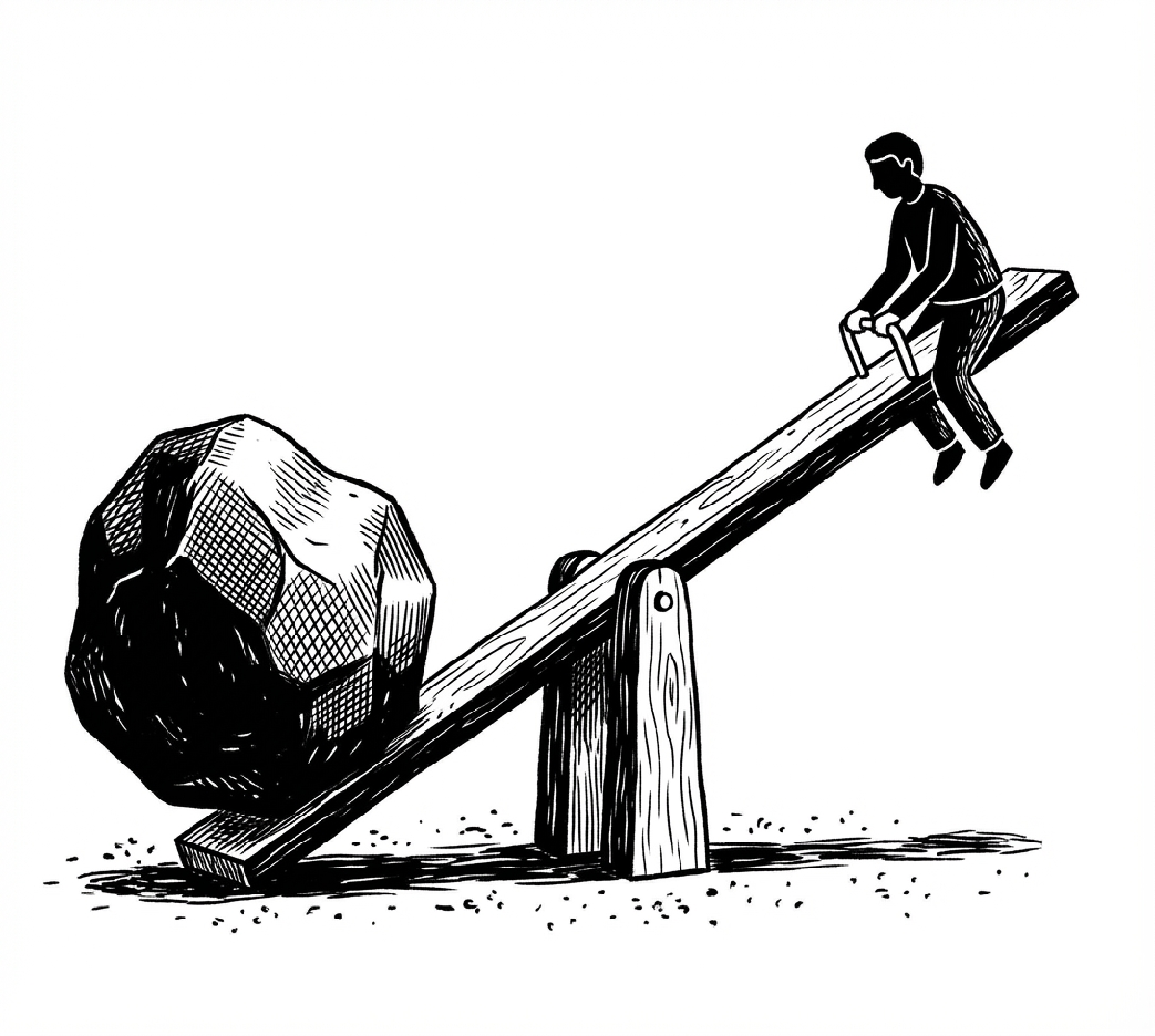
Imagine a seesaw. On one side is you. On the other side is your partner. In the middle is a pile of potential problems. Lawsuits. Data breaches. Late payments. Natural disasters.
The negotiation of a contract is simply the process of deciding whose side of the seesaw those problems sit on.
When a large corporation sends you their “Standard Service Agreement,” they have pushed every single rock onto your side of the seesaw. They are not doing this because they are evil. They are doing it because they are rational actors trying to minimize their own risk.
If you sign it without pushing back, you are accepting liability for things you cannot control.
Your job is to look at those rocks and ask a simple question.
“Is it fair for me to carry this?”
If you are a small design agency and your client wants you to be liable for unlimited damages if their website gets hacked, that is not fair. You do not control their server security. You should not carry that rock.
Once you view contracts through the lens of risk allocation rather than legal compliance, the text becomes much less intimidating. It becomes a logic puzzle.
The Trinity of Red Flags
#I am not a lawyer and this is not legal advice… Just fair warning to do your own research and learn as quickly as possible.
While every contract is unique, there are three specific clauses that trap founders over and over again. If you only scan a document for three things, scan for these.
The first is Indemnification.
This is the scary word we mentioned earlier. To indemnify someone means to pay for their loss. If you agree to indemnify a client, you are acting as their insurance policy.
Watch out for “uncapped” indemnification. This means there is no limit to how much you might have to pay. If their mistake leads to a ten million dollar lawsuit and you agreed to uncapped indemnity, your company is bankrupt. Always fight for a cap. Usually, the cap should be the total amount of money you have been paid under the contract.
The second is Intellectual Property Assignment.
This is critical for tech startups. You need to own what you build.
If you hire a freelancer or a dev shop, the default law in many jurisdictions is that the creator owns the work, not the person who paid for it. You need a specific clause that states the work is “Work for Hire” and is effectively assigned to your company.
Big companies love to do this to little startups and tell them “we will give you advice and you give us your intellectual property”. The reply should always be a polite “Hell no.”
I have seen startups try to raise venture capital only to realize they do not actually own their code base because they never signed an IP assignment with their early contractors. This makes your company worthless to an investor.
The third is Termination.
This is the divorce clause. How do you get out?
Many vendors will try to lock you into multi-year auto-renewing contracts. They will say you can only cancel if you provide notice within a specific 30-day window. If you miss that window, you are on the hook for another year.
You want “Termination for Convenience.” This means you can walk away at any time, usually with 30 days notice. If they refuse to give you that, you need to know exactly how long you are married to them.
The Plain English Defense
#Lawyers write in a specific dialect called legalese. They use words like “herein,” “aforementioned,” and “notwithstanding.”
They claim this provides precision. Often, it just provides confusion.
Do not be afraid to look stupid. If you read a sentence three times and still do not understand what it means, do not sign it.
Pick up the phone. Call the counterparty. Say this exact phrase.
“I am reading section 4.2 and I am having trouble parsing it. Can you explain to me, in plain English, what this clause is intended to achieve?”
Write down their answer.
If their explanation sounds reasonable, but the text looks complex, ask them to change the text to match their explanation. Or replace their text with their simple explanation from the phone.
If they refuse to simplify the language, that is a data point. It usually means the clause does something they do not want to admit out loud.
Get a solid lawyer. That is always the easiest, most correct, and most expensive option.
Ambiguity is the enemy of a contract. A good contract should be a boring instruction manual that anyone can read. If it reads like a riddle, it is a bad contract.
The Economics of Counsel
#This brings us to a practical financial question.
When should you hire a lawyer?
In the early days, you cannot afford to pay a lawyer $500 an hour to review every NDA (Non-Disclosure Agreement) or small vendor contract. You would run out of cash in a month.
You have to triage. This will be true later as well, it’ll just be for larger volumes.
You can likely handle standard NDAs, small vendor agreements, and basic contractor offer letters yourself, provided you have good templates. There are resources online like Y Combinator’s “Safe” documents or Clerky that provide industry-standard templates.
Use those. Do not write legal text from scratch.
However, there are moments when being cheap is expensive.
If you are dealing with equity, hire a lawyer. Equity mistakes are permanent. If you screw up the vesting schedule or the stock option pool, it is incredibly difficult to fix later.
If you are selling the company or raising institutional capital, hire a lawyer. The investors have lawyers. If you do not, you are bringing a knife to a gunfight.
If you are dealing with a complex partnership that involves sharing intellectual property, hire a lawyer. The risk of losing your core asset is too high.
For everything else, use your judgment. Weigh the cost of the legal fees against the cost of the worst-case scenario.
The Handshake Paradox
#We must address the human element.
Many founders rely on handshakes. They say, “I trust this person. We do not need a long contract.”
This is a misunderstanding of what a contract is for.
A contract is not a sign of distrust. It is a tool for alignment.
Human memory is fallible. You might remember the deal one way. Your partner might remember it another way. Six months from now, when money is tight, those memories will diverge.
The contract serves as the external hard drive for your agreement. It preserves the meeting of the minds.
Writing things down forces clarity. It forces you to discuss the edge cases before they happen. It saves the friendship because it removes the ambiguity that leads to resentment.
So the next time you get that PDF, do not just click the yellow box.
Pour a cup of coffee. Sit down. Read the boring text.
Look for the risk. Ask the hard questions.
It is tedious work. But it is the work of a CEO.