

It is 7:00 PM on a Tuesday.
You have been in the office for eleven hours. The team has gone home. The Slack notifications have finally slowed down to a trickle. You are staring at an email from a vendor asking a simple question about a contract renewal date.
It requires a binary choice. Yes or no. Maybe a specific date. It should take thirty seconds to type the response and hit send.
But you cannot do it.
You stare at the cursor blinking. The cognitive load feels heavier than it should. You close the laptop and decide to deal with it tomorrow. You wonder why you lost your edge over something so trivial.
This is not a lack of discipline.
It is not a lack of passion for what you are building. It is a biological reality known as decision fatigue. For a founder, understanding this mechanism is as important as understanding your cash flow statement.
The Biology of the Brain Battery
#We often treat our ability to make choices as if it were a skill we can sharpen indefinitely. We assume that if we are smart and driven, we can make good decisions from the moment we wake up until the moment we fall asleep. Cultural narratives about the hustle reinforce this.
Science suggests otherwise.
Social psychologist Roy Baumeister coined the term ’ego depletion’ to describe this phenomenon. The core concept is that willpower is not a trait. It is a resource.
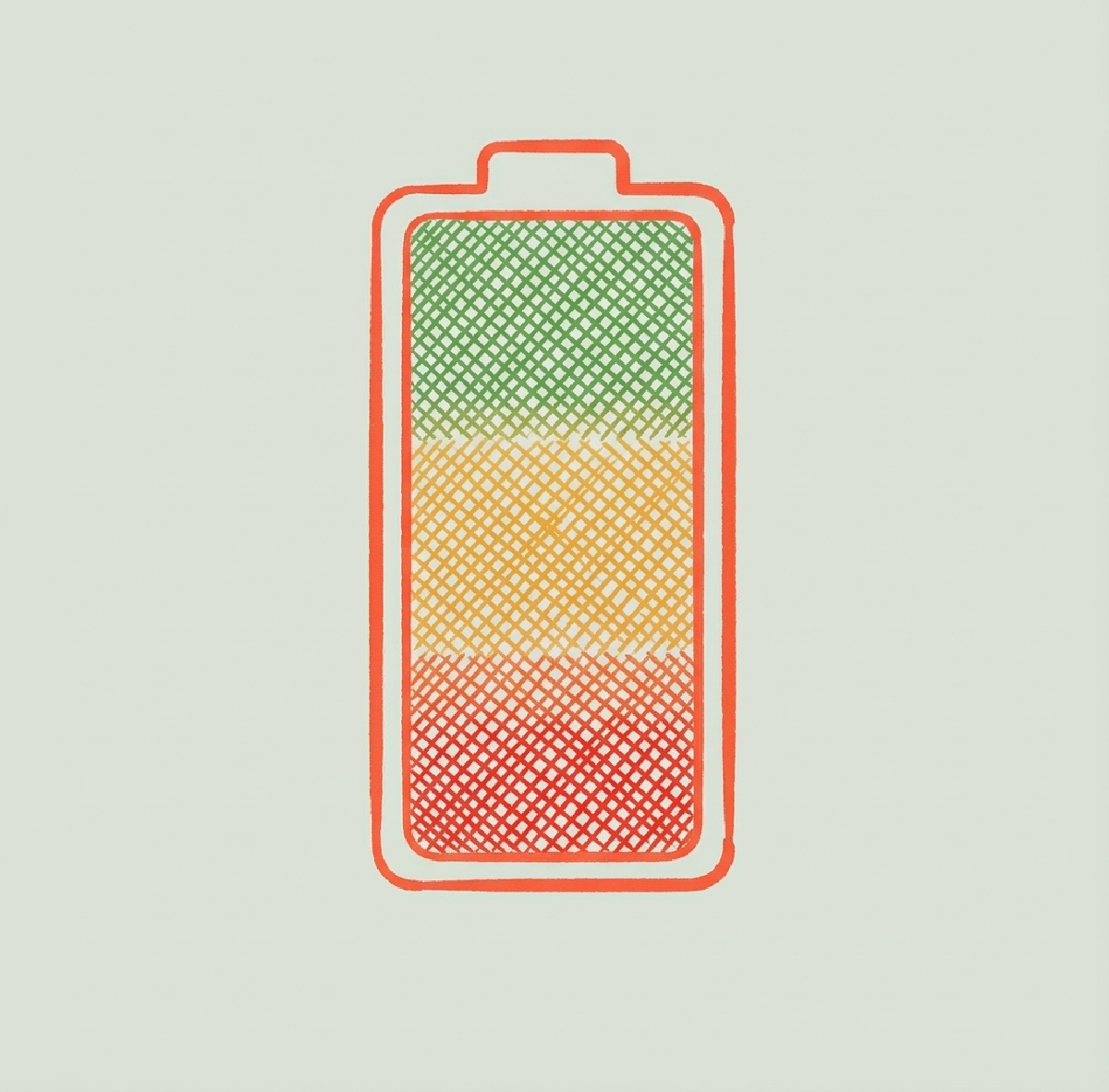
Think of it like a fuel tank or a battery. Every time you exercise self-control or make a decision, you draw from this finite supply.
What is fascinating is that the brain does not seem to distinguish between the gravity of the decisions. Deciding which socks to wear consumes a similar unit of energy as deciding whether to pivot your product strategy.
When the tank runs low, the brain shifts into a protective mode. It stops doing the hard work of trade-off analysis. Instead, it looks for shortcuts.
This usually manifests in two ways.
The first is recklessness. You make a snap decision just to get the problem off your plate. You hire the candidate who is ‘good enough’ because you cannot bear another interview.
The second is paralysis. You do nothing. You preserve the status quo because it requires the least amount of energy. This explains the email you could not answer at 7:00 PM.
The High Cost of the Trivial
#If you are building a company, your day is a minefield of choices.
You are the backstop for every department. You are navigating product fits, hiring issues, legal hurdles, and fundraising pitches.
If you start your day with a full tank of decision capital, how are you spending it?
Many founders bleed out their energy before they even get to the office. They agonize over breakfast. They scroll through social media, which is essentially a rapid-fire series of micro-decisions on what to pay attention to. They answer low-level emails.
By the time they sit down to design the architecture of their next quarter, they are operating at 60 percent capacity.
There is a reason figures like Steve Jobs or Mark Zuckerberg became famous for wearing the same outfit every day. It was not a fashion statement. It was a defensive strategy. They removed a variable to save that unit of energy for something that impacted the bottom line.
We have to ask ourselves a difficult question here.
Are we investing our mental capital, or are we just spending it?
If you spend your energy on the trivial, you are technically ‘working.’ But you are not building value. You are just processing inputs.
Structuring Your Decision Diet
#So how do we fix this? We cannot simply decide to have more energy. We have to change the structure of our environment.
The first step is categorization. Not all decisions are created equal, and they should not be treated with the same level of cognitive care.
Amazon founder Jeff Bezos uses a framework of Type 1 and Type 2 decisions.
- Type 1 decisions are irreversible. They are one-way doors. If you walk through and don’t like what you see, you cannot turn around. These require deep deliberation and your full energy bar.
- Type 2 decisions are reversible. They are two-way doors. If you make a mistake, you can back out.
The problem is that most startups treat Type 2 decisions like Type 1 decisions. We hold meetings about office furniture or logo variations as if the fate of the company rests on them.
By categorizing these quickly, you can delegate the Type 2 decisions or make them instantly. Save your agony for the one-way doors.
We also need to look at timing.
A famous study of parole judges showed that early in the day, prisoners were granted parole about 65 percent of the time. As the day wore on, that number dropped to near zero. After a food break, it spiked back up to 65 percent.
The judges were not malicious. They were depleted. The safe default for a tired brain is ’no.’
If you have a critical strategic decision to make, do not schedule it for 4:00 PM. Do it first thing in the morning. Protect that time block aggressively.
The Unknowns of Intuition
#There is an area here where the science gets a bit grayer. We are still learning about the role of intuition in this process.
Does relying on ‘gut feeling’ cost less energy than analytical processing?
Some data suggests that expert intuition is a fast-track process that bypasses the heavy lift of executive function. This implies that as you gain experience in your field, you can make more decisions with less fatigue because you are pattern matching rather than analyzing from scratch.
But this is dangerous for a founder.
Startups operate in uncertainty. The patterns of the past may not apply to the market you are disrupting today. Relying on low-energy intuition might lead you to miss the nuance of a new problem.
We have to wonder: When is it safe to coast on experience, and when does a situation demand we burn the energy to look deeper?
This is the art of leadership that sits on top of the science.
Restoration and Routine
#Finally, we must address the input side of the equation. You deplete the battery, but you must also recharge it.
Glucose plays a role. Sleep plays a massive role. But so does mental downtime.
In a culture that glorifies the ‘always-on’ mentality, we often view breaks as weakness. But from a neurological standpoint, a walk outside or twenty minutes of meditation is not time off. It is a system reboot.
If you are trying to build something that lasts, you cannot sprint the whole way. You have to manage your psychology as an asset.
Go back to that Tuesday night. The email is still there.
The answer is not to force yourself to reply. The answer is to realize you have spent your budget for the day. Close the laptop. Sleep.
Tomorrow, you will wake up with a full tank. Make sure you spend it on the choices that will actually change the trajectory of your business.