
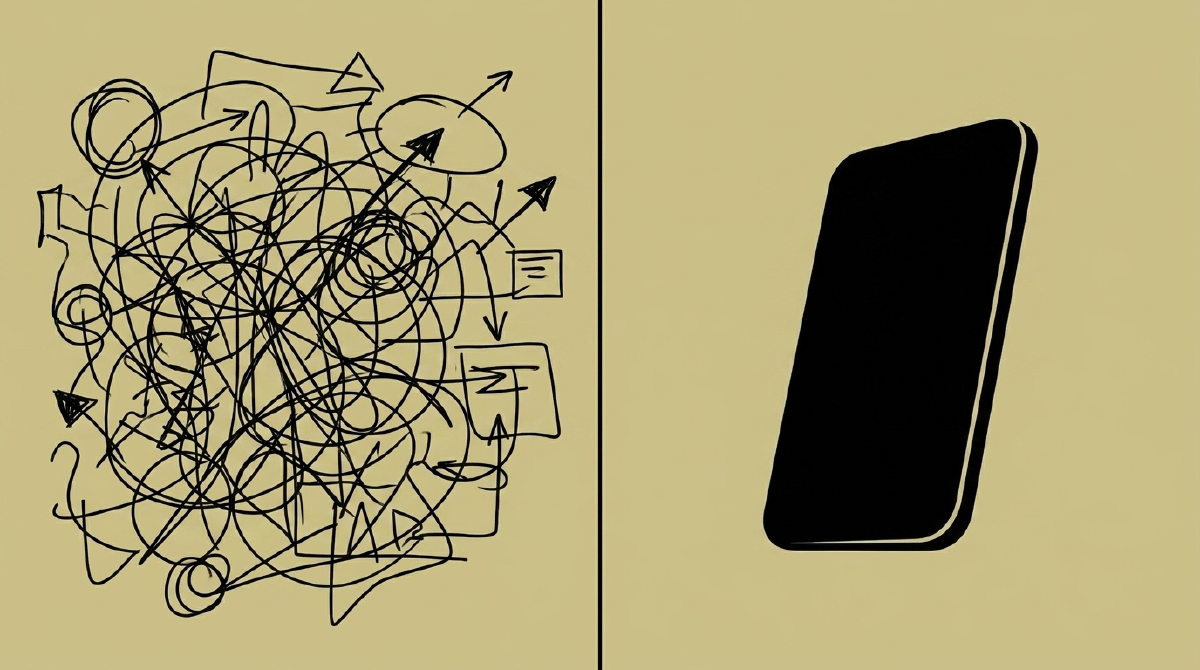

Picture a boardroom table. A founder is clicking through a slide deck. The colors are crisp. The charts point up and to the right. The product demo works exactly as intended. Then a partner at the far end of the table asks a very simple question. The founder freezes. The pitch halts right there.
What was that question?
We will get to that shortly.
As a founder, you are wired to build. You observe inefficiency and write code to fix it. You notice a broken process and design a more logical one. This builder mentality is what gets a business off the ground. It is also a trait that can negatively impact a pitch deck. When you focus heavily on what you have built, you miss the foundation of why the product needs to exist in the first place. You have to pivot your perspective. Your pitch deck must focus heavily on the problem you are solving. It also needs to showcase your unique insight into the target market.
The Trap of the Solution Slide
#Founders spend months developing their product. It makes sense that they want to show it off. A standard pitch deck often rushes through the problem in a single slide. Then it spends ten slides detailing features, roadmaps, and system architecture.
This structure assumes the market pain is obvious to everyone in the room. In reality, the pain is rarely obvious to people outside your specific industry. Investors and external partners are generalists. They review health tech concepts in the morning and consumer hardware ideas in the afternoon. If you do not anchor them deeply in the problem, your solution lacks context.
Consider what happens when you lead with the solution. You are asking the audience to work backward. You are asking them to deduce the problem from your feature set. This creates a cognitive disconnect. If they do not feel the friction of the problem, they will not buy into the necessity of the fix.
A problem-heavy pitch deck flips this ratio. You spend significant time unpacking the exact nature of the friction. You describe who experiences it. You outline how often they experience it. You detail what it costs them in time and capital. You establish a baseline of reality before you ever introduce your product.
Structuring a Problem-Centric Deck
#How do you actually build this out? You need to move beyond vague statements. Stating that an industry is broken is not sufficient. You must quantify the friction and document the reality of the market.
- Start with a micro-narrative. Introduce a specific user facing a specific roadblock.
- Expand to the macro level. Show how many users share this exact roadblock.
- Detail the current workarounds. What temporary solutions are people currently using to get by?
- Calculate the cost of the status quo. How much capital is lost using these workarounds?
- Identify the exact point of failure. Where does the current system completely break down?
By organizing your presentation this way, you lead the audience to a logical cliff. The only reasonable way off the cliff is the solution you are about to present.
This takes discipline. You have to resist the urge to show product screenshots too early. You are setting a stage and ensuring the audience understands the stakes.
The Power of Unique Insight
#Let us return to that boardroom. The founder had just presented a logistics software platform. It was objectively faster than the legacy systems on the market. The partner looked at the presentation and asked: “If the incumbent software is so slow, why do fleet managers actively refuse to switch to new tools?”
The founder did not know the answer.
They had identified a technical problem but lacked a unique market insight. They assumed software speed was the only variable that mattered to the user.
A unique insight is an earned secret. It is a fact you know about the market that outsiders do not. It is rarely found in a generic search query. It comes from hundreds of hours of customer interviews, direct observation, and industry immersion.

Your pitch deck needs to highlight your earned secret. You are not just solving a generic problem. You are solving a problem based on a behavioral or systemic truth that others have missed.
Proving Market Intimacy
#Having a unique insight is one hurdle. Proving it to an audience is another. You must demonstrate market intimacy. This means showing that you understand the daily reality of your target customer from a ground-level perspective.
There are several ways to prove this intimacy in your materials:
- Use direct quotes from target users. Let the customer explain the pain in their own words rather than paraphrasing it.
- Map out the specific buyer journey. Show the exact stakeholders involved in a purchasing decision.
- Highlight the operational toll of the problem. Business problems have a direct impact on employee retention and morale.
- Share your initial failed hypotheses. Briefly mention what you thought the problem was before you did the research.
This last point is particularly effective. It demonstrates a scientific approach. It proves you are not just guessing based on a hunch. You formed a hypothesis, tested it, and refined your understanding based on market data. It builds trust with your audience.
Navigating the Unknowns
#No matter how much research you conduct, there will be gaps in your knowledge. A solid pitch deck acknowledges these gaps. It is a mistake to present a polished narrative that claims to have zero risk. Building a business is an exercise in managing risk.
What are the questions we still need to answer?
Perhaps you understand the end-user pain clearly, but the exact sales cycle length remains unproven. Maybe you know the problem exists in mid-market companies, but enterprise adoption is still a question mark. You might be unsure if the pricing model should be a flat fee or based on usage.
Surface these unknowns.
When you clearly state what you are still testing, you transition the conversation. You move from a rigid sales presentation to a collaborative exploration. Investors and partners appreciate a founder who knows what they still need to learn. It shows you have a framework for discovery rather than a rigid set of assumptions.
Building a company is an ongoing process of discovery. Your pitch deck is a snapshot of that discovery at a single point in time. If you focus primarily on the solution, your deck will age poorly as your product inevitably shifts and evolves.
Problems rarely pivot.
If you deeply anchor your presentation in a validated problem and a unique market insight, you build a foundation that lasts. The features may change. The pricing model might evolve. The core friction you are solving remains your operational compass. Focus your pitch deck heavily on that compass.