
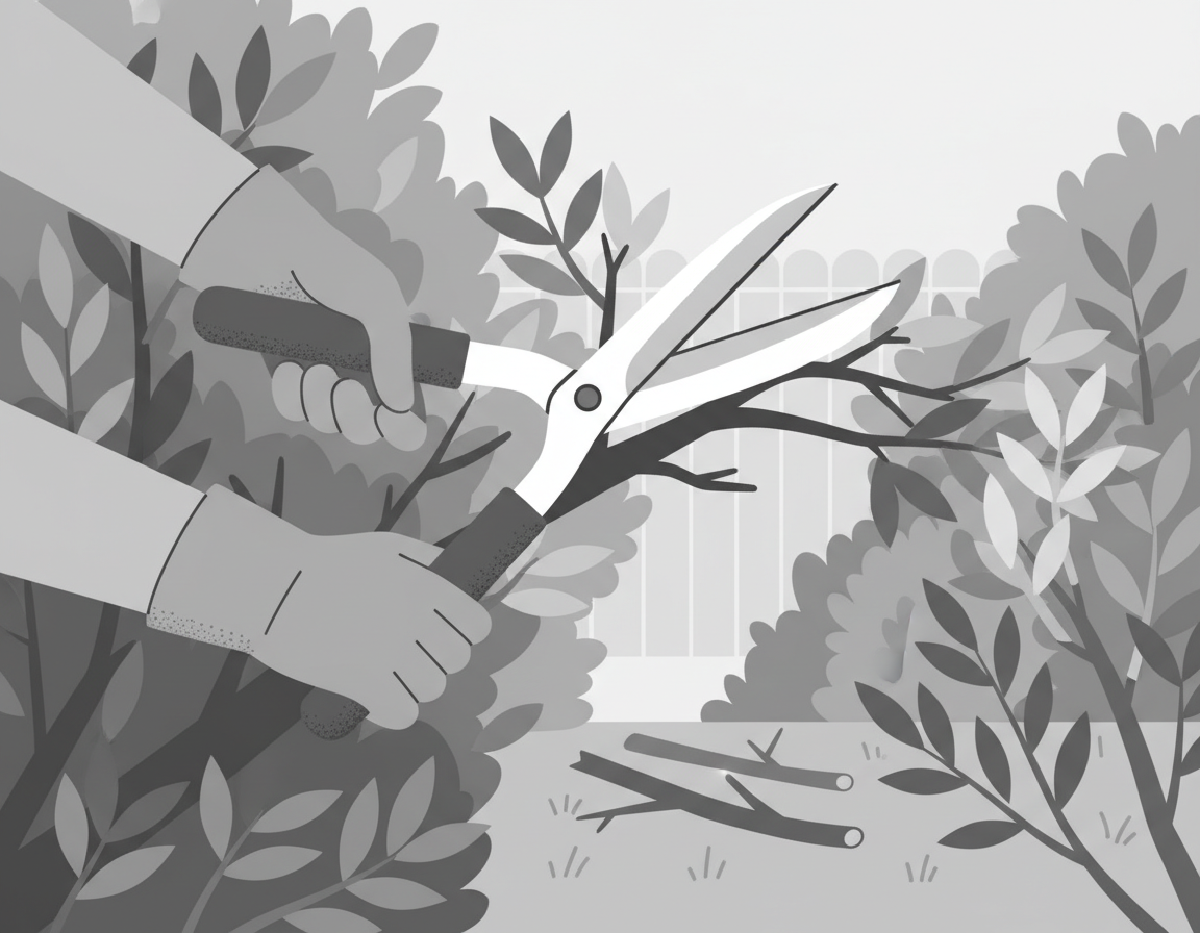

I once watched a founder destroy a perfectly viable business because he simply refused to shrink.
He had built a company that generated solid revenue and had a loyal customer base. The problem was not the product. The problem was the map he was using to navigate. He was convinced that the only direction a graph should go is up and to the right. When the market shifted and his margins compressed, he doubled down on expansion. He hired more sales staff to push a product that was becoming less profitable. He rented a larger office to house the new people.
He burned through his cash reserves in six months.
The company did not die because the product failed. It died because the strategy failed.
It is a story I see repeated often. We are conditioned to believe that growth is the default state of a healthy organism. In biology, however, unmitigated growth is often a sign of disease. Healthy organisms prune. They shed. They conserve energy during winter to ensure they survive to see the spring.
In business, this process is called retrenchment. It is one of the most difficult strategies to implement because it requires fighting against your own ego. But understanding when to pull back is just as important as knowing when to push forward.
The Addiction to Expansion
#Why is it so hard to make the decision to get smaller?
The answer usually lies in how we measure success. Startups and small businesses operate in an ecosystem that celebrates headcount, office square footage, and top-line revenue. We confuse size with strength. We confuse activity with value.
When you are in the thick of building, it feels counterintuitive to cut a product line that is bringing in revenue, even if that revenue is barely covering its own costs. You worry about the perception. What will the investors think? What will the employees think? What will your competitors say?
These are the wrong questions.
The scientific reality of business is that complexity has a cost. As you add layers to an organization, efficiency tends to drop unless you actively manage it. This is the law of diminishing returns in action. There comes a point where the next dollar of revenue costs you a dollar and ten cents to acquire and service. If you keep pressing the accelerator at that stage, you are not growing the business. You are accelerating its demise.
We need to reframe the concept of shrinking. It is not a retreat. It is a consolidation of forces.
Diagnosing the Need for Retrenchment
#How do you know when it is time to initiate a retrenchment strategy? The signs are often buried in the metrics that founders ignore when they are too focused on sales.
Look at your gross margins. Are they eroding over time despite rising revenue? This indicates that your cost of delivery is outpacing your ability to charge for value.
Look at your cash conversion cycle. Is it taking longer to get paid while your payables are due sooner? This creates a cash crunch that growth often exacerbates rather than solves.
Consider your operational focus. Have you drifted into markets where you have no competitive advantage? A common scenario involves a company that is dominant in one niche trying to expand into three others simultaneously. Resources get spread thin. The core business suffers because the best talent is distracted by the new, unprofitable ventures.
Retrenchment begins with a cold, hard look at the Profit and Loss statement. It requires separating the ego from the data. If a limb of the business is gangrenous, you cut it off to save the body. You do not hope it gets better on its own.
The Mechanics of Pruning
#
This can take several forms.
Cost Cutting: This is the most immediate lever. It involves auditing every expense. Do you need five SaaS subscriptions that do roughly the same thing? Do you need that expensive downtown office if half the team is remote? These are the easy cuts. They trim the fat.
Asset Disposal: Sometimes the company owns assets that are tying up capital without generating sufficient return. Selling off a piece of machinery, a patent you are not using, or even a subsidiary can provide the liquidity needed to stabilize the core operation.
Product or Market Withdrawal: This is the painful part. This is where you tell customers you are no longer serving their region. You shut down the beta product that 10% of your users love but that costs 50% of your engineering time to maintain. You fire profitable customers who are actually unprofitable when you factor in the support time they demand.
This is not about being cruel. It is about resource allocation. If you have limited water, you water the crops that will feed you, not the weeds at the edge of the field.
The Human Element
#There is a variable in this equation that spreadsheets cannot capture. The people.
Retrenchment often involves layoffs. There is no way to sugarcoat that reality. When you reduce the size of the business, you need fewer people to run it. This is the hardest part of the job.
The mistake many founders make is trying to hide the reality from the team until the last possible moment. They think they are protecting morale. In reality, they are destroying trust. People are perceptive. They know when things are not adding up.
When you implement a retrenchment strategy, clarity is your only ally. You must explain the why. You have to articulate that the goal is to save the company and secure the jobs of the remaining employees. If you do this poorly, you trigger what psychologists call ‘survivor syndrome.’ The employees who remain become risk-averse, guilty, and anxious. They spend their time looking for new jobs rather than helping you rebuild.
Communication must be frequent and honest. You are asking the team to do more with less. You are asking them to believe in a smaller vision. Why should they?
Because a smaller, profitable business is sustainable. A large, bleeding business is a ticking clock.
Positioning for the Rebound
#The goal of retrenchment is not to stay small forever. It is to find a solid foundation.
Think of a slingshot. You have to pull back to generate potential energy. By cutting costs, exiting distracting markets, and focusing on your core competency, you stabilize the cash flow. You stop the bleeding. You regain control of your destiny.
Once profitability is restored, you have options again. You can choose to grow, but this time you can do it deliberately. You can invest in the areas that actually generate a return. You are no longer growing for the sake of vanity metrics. You are growing for value.
I mentioned the founder at the beginning of this piece. The one who refused to shrink. He eventually lost the company to a private equity firm for pennies on the dollar. The new owners immediately implemented the retrenchment strategy he was too proud to execute.
They cut the staff by 30%. They killed the new product lines. They focused entirely on the original, boring service that made money.
Within eighteen months, the company was profitable again. Two years after that, it was bigger than it had ever been under the founder.
The lesson was expensive for him, but it is free for you. Strategy is not just about attack. It is also about defense. It is about survival. Sometimes, the bravest thing you can do is admit that your current path is unsustainable and choose to get smaller.
Are you looking at your business through the lens of what you want it to be, or what it actually is today? The answer to that question will determine if you make the cut, or if the market makes it for you.