
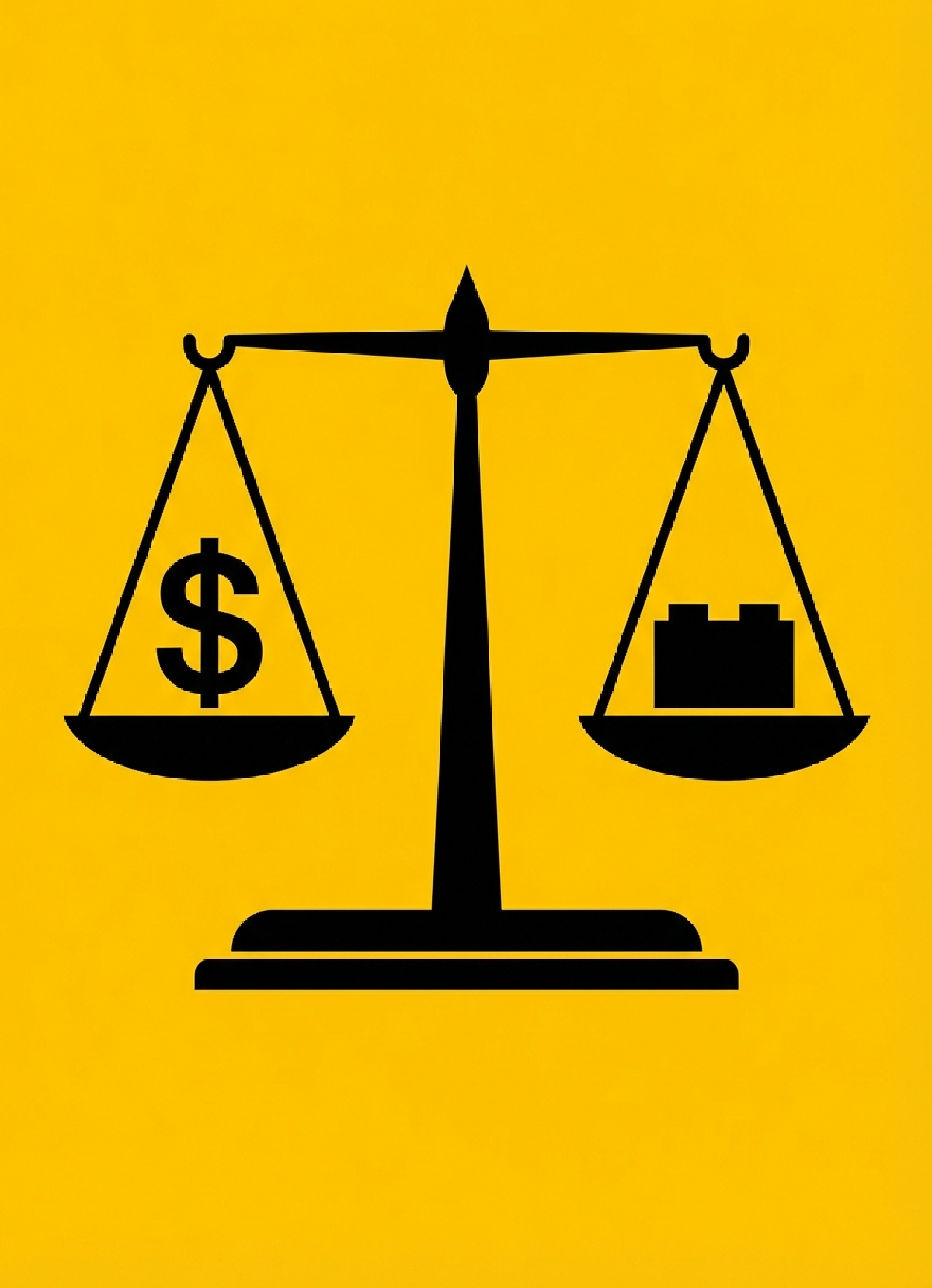

The Financial Snapshot
#At its simplest level, a balance sheet is a financial statement that reports a company’s assets, liabilities, and shareholders’ equity at a specific point in time. It provides a snapshot of what you own and what you owe on a specific date.
For a startup founder, this document is the truest test of your business health. While other reports might show how much you sold last month, the balance sheet tells you if your company is solvent.
It is called a balance sheet because it adheres to a strict formula where the two sides must equal each other. This structure forces a level of discipline that is often missing in early stage ventures.
The Core Equation
#To read a balance sheet, you only need to understand one fundamental equation.
Assets = Liabilities + Equity
This relationship effectively summarizes your business. You use liabilities (like loans) and equity (investor money or retained earnings) to buy assets.
- Assets: These are resources the company owns that have value. They are split into current assets, like cash and inventory, and non-current assets, like intellectual property and equipment.
- Liabilities: These are debts or obligations the company owes to outsiders. This includes accounts payable to vendors, loans, or deferred revenue where you have been paid for a service you have not delivered yet.
- Shareholders’ Equity: This represents the amount of money that would be returned to shareholders if all assets were liquidated and all debts were paid off.
If this equation does not balance, there is an error in your books. It is a binary check on your accounting.
Balance Sheet vs. Profit and Loss
#The most common confusion for new entrepreneurs arises between the balance sheet and the Profit and Loss (P&L) statement.
Think of the difference in terms of time.
The P&L statement is like a video recording. It captures activity over a specific period, such as January 1st to January 31st. It tells you how much revenue you generated and what you spent during that window.
The balance sheet is a photograph. It freezes time at a specific moment, such as 11:59 PM on January 31st. It does not care about what happened over the month. It only cares about where the money sits right now.
You can have a profitable P&L but a terrible balance sheet if you are carrying too much debt. Conversely, you can have a loss on your P&L but a strong balance sheet if you have significant cash reserves from a recent investment round.
Why It Matters for Founders
#Startups often focus obsessively on growth metrics and burn rate, ignoring the balance sheet until tax season. This is a mistake.
Investors look at the balance sheet to determine how efficiently a company uses its capital. A bloated balance sheet with too much inventory or unpaid receivables suggests operational inefficiency.
Furthermore, this statement forces you to ask difficult questions about value.
We often list intangible assets like brand value or proprietary software on our books. But is that valuation accurate? If the market shifts, does that asset retain its value?
The balance sheet forces you to confront the reality of your liquidity. It strips away the optimism of sales projections and leaves you with the cold hard facts of what you possess and what you owe. It is the foundation upon which you build a lasting organization.