


In the early stages of building a startup, you are constantly looking for ways to get attention. You need customers to validate your product and revenue to keep the lights on. This search for attention usually leads founders down several paths including advertising, public relations, and content creation.
To make sense of these different channels, marketing professionals often use the POEM framework. This stands for Paid, Owned, and Earned Media. While all three are necessary components of a holistic strategy, owned media is the only one that builds permanent asset value for your company.
Owned media refers to any digital property that a brand controls and manages exclusively. The key word here is control.
The Core Components
#When we talk about owned media, we are talking about the destination. These are the places where you set the rules, you control the user experience, and you own the data.
Common examples include:
- Your company website
- Your blog or publication
- Your email newsletter list
- Your mobile application
- Whitepapers or ebooks hosted on your domain
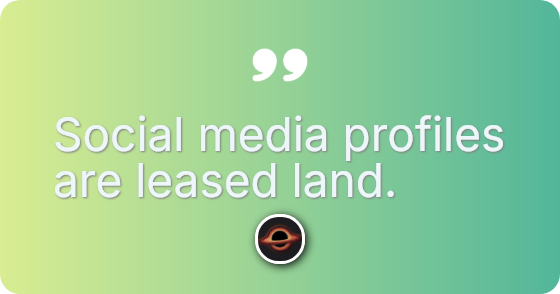
Social media profiles are frequently mistaken for owned media. They are not. A Facebook page or a Twitter account is leased land. You do not control the algorithm, you do not have full access to the user data, and the platform can change the rules or delete your account at any time without your consent.
Owned vs. Paid and Earned
#
Paid media is advertising. You pay a third party to rent their audience for a specific amount of time. Once you stop paying, the traffic stops immediately. It is effective for speed but offers zero long-term equity.
Earned media is publicity. This is when other people talk about you. It includes press coverage, reviews, and word of mouth. It is high in credibility but low in predictability. You cannot force it to happen.
Owned media sits between these. It requires an upfront investment of time and resources to build, much like a product. However, once you have an audience on an owned channel, you can reach them repeatedly without paying incremental costs for every interaction.
The Asset Value of Control
#For a startup, the primary value of owned media is risk mitigation and asset accumulation.
If your entire business relies on Instagram for customer acquisition, you are vulnerable. A single algorithm update could wipe out your revenue stream overnight. By converting that social traffic into an email list or website visitors, you transfer the relationship to a platform you control.
This creates a direct line of communication with your customers.
It also increases the valuation of your company. An active, engaged email list of 50,000 potential buyers is a tangible asset that can be valued during an exit. A collection of social media followers is much harder to value because it is leased.
The Resource Trade-off
#There is a downside. Building owned media takes time. It is a slow process compared to the instant gratification of paid ads.
Founders must ask themselves difficult questions regarding resource allocation. Do you have the runway to wait six months for a blog to gain traction? Do you have the internal talent to produce content that is actually worth reading?
It is often unclear when the crossover point occurs where the investment in content production becomes cheaper than the cost of customer acquisition through ads. This is the uncertainty you have to navigate. You are building an asset, but you are paying for it with time you might not have.