


Building a startup is usually framed as a series of beginnings. We talk about the launch, the first hire, the first sale, and the first round of funding. We are obsessed with the start. But seasoned entrepreneurs know that the real value of a company is determined by how well it can function at the end, or more specifically, how well it can function without its creator.
Two recent articles from iambenschmidt tackle this exact challenge. They force us to look at the uncomfortable reality that our businesses might be too dependent on us. Whether it is the grim math of the “Bus Factor” or the strategic necessity of planning an exit, the lesson is the same: if your business cannot run without you, you have not built a business. You have built a job.
This week we are looking at the mechanics of resilience and succession planning. These are not topics for the distant future. They are operational frameworks you need to implement right now.
Reverse Engineering Your Exit
#
Most founders believe that thinking about an exit strategy is a distraction. They worry that if they plan for the end, they are quitting on the present. But the article “Designing the End” argues the exact opposite. Your exit strategy is not about leaving; it is about engineering value today.
The piece highlights a common tragedy in the startup world: the successful agency owner who wants to sell but cannot because the entire company relies on his specific relationships and personality. He optimized for cash flow but failed to build a transferable asset. To avoid this trap, you must reverse engineer your timeline based on three potential paths:
- The Strategic Acquisition: Building proprietary tech to plug a hole for a giant incumbent.
- The Financial Exit: Building a predictable cash flow machine for private equity.
- The IPO: Building an institution with rigorous governance for public markets.
If you do not know which path you are on, you are likely optimizing for the wrong metrics. By defining the destination, you clarify the path. It forces you to ask if you are building an ego project or a sellable asset. As the article states, a business that depends on the founder is a liability, not an asset.
Read more about Designing the End
The Math of Resilience
#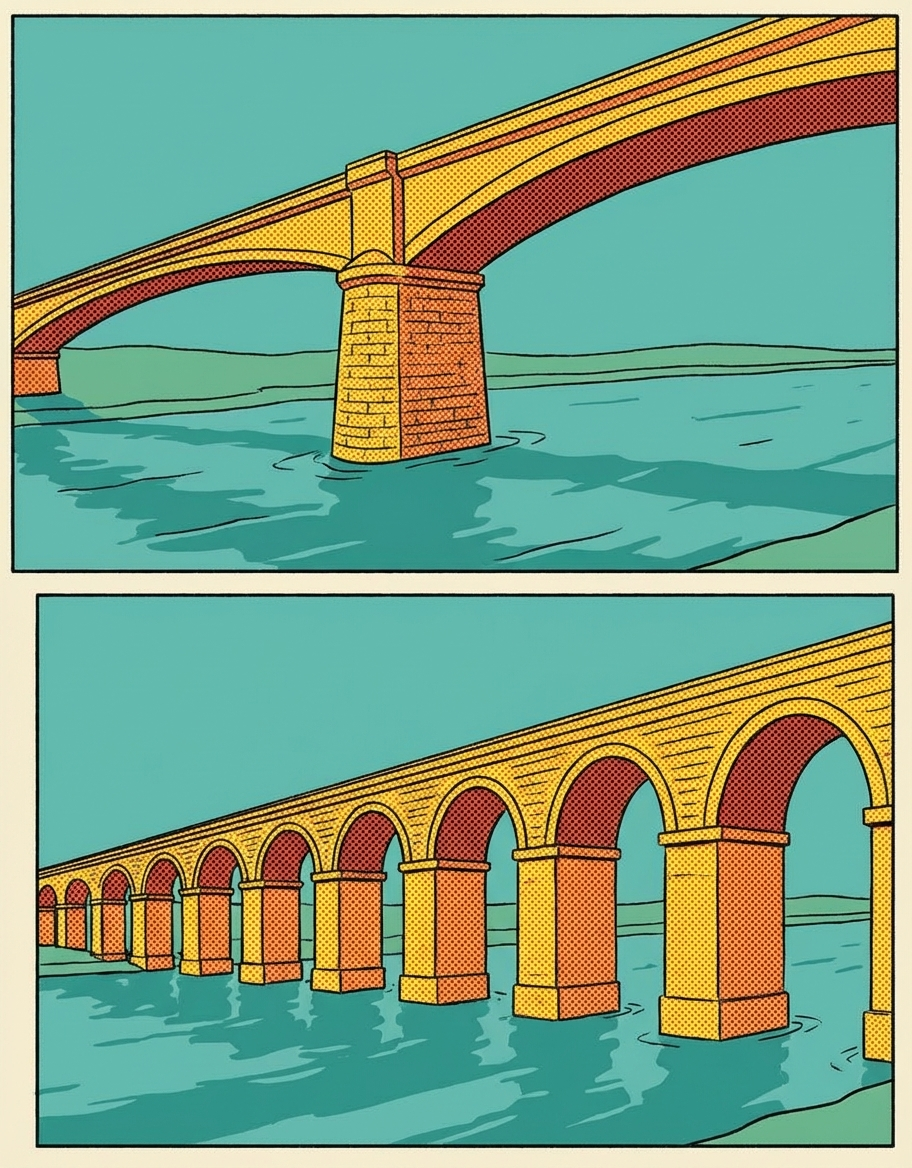
While the exit strategy looks at the long term, the “Bus Factor” looks at the immediate risks in your team structure. It poses a morbid but necessary question: If your lead engineer (or you) got hit by a bus tomorrow, would the company survive?
This article breaks down the “Illusion of Efficiency.” In the early days, it is faster for one person to hoard knowledge. If Jane is the only one who knows the billing code, she can fix it fast. But this creates a Single Point of Failure. If Jane leaves, wins the lottery, or simply takes a month off, the business stalls. The article suggests several tactical ways to mitigate this risk without doubling your headcount:
- Pair Working: Two people working on one task to transfer tacit knowledge.
- The Rotation: Swapping roles temporarily (e.g., support leads handling sales) to ensure coverage.
- The Vacation Test: Forcing key people to fully disconnect to see what breaks in their absence.
We often treat high dependency as a badge of honor. We like being the hero who saves the day. But a high Bus Factor lowers your valuation. Acquirers buy machines that run, not collections of smart freelancers who might walk out the door.
Read more about The Bus Factor
The Weakness: The Hero Complex
#Both of these topics expose a critical weakness in many startup cultures: The Hero Complex. We often conflate our own busyness with business value. Founders and key employees subconsciously enjoy being the bottleneck because it provides job security and feeds the ego. If I am the only one who can fix the server, I am indispensable.
This psychological barrier is the hardest part of succession planning. To address it, we must shift the cultural narrative. We need to celebrate the teachers, not just the doers. Status in your startup should be awarded to the person who makes themselves redundant, not the person who hoards knowledge. If you can document your role and train a successor, you free yourself to tackle higher order problems. If you stay the hero, you stagnate.
Navigating the Unknown
#There are variables we cannot control. We do not know what the interest rates will be in five years. We do not know if the IPO market will be open. We do not even know if we will still have the same passion for the industry a decade from now.
However, we must prioritize movement over debate. We should not get stuck debating the perfect time to sell or the perfect valuation. Instead, we should focus on the action of building optionality. A clearly defined exit strategy does not force you to sell. It simply gives you the choice.
If you build a company that is ready to be sold—one with clean books, redundant systems, and no single points of failure—you have built a company that is a joy to own. You might decide to keep it forever. But you have the freedom to choose, rather than being a prisoner of your own creation.