


Building a startup is rarely a linear journey from idea to IPO. It is usually a messy and chaotic process of finding a problem that a specific group of people is desperate to solve. We often refer to this state as product market fit. However, getting there requires more than just a good product. It requires a founder to manage their own psychology and to possess the ruthlessness required to change direction when the data demands it.
In this update, we are looking at two critical components of that journey. We are examining how the support systems around a founder can actually hinder progress if not managed correctly. We are also looking at the mechanics of the pivot, which is often the only bridge between a failing idea and a viable business. These topics are not just theoretical exercises. They are the practical realities that determine whether a company survives long enough to matter.
The Role of Founder Psychology in Market Fit
#
Founders often seek empathy. It is lonely at the top and the pressure is immense. However, there is a distinct difference between support that helps you build and support that distracts you from the hard truths of the market. When seeking product market fit, you need clear signals. You need to know if customers actually want what you are building. Sometimes, a support network that is overly empathetic can shield a founder from negative feedback. They might tell you that you are doing a great job or that the market just doesn’t get it yet.
This is dangerous. It creates a false positive. You might believe you are closer to success than you actually are. The article discusses how to distinguish between empathy that heals and empathy that distracts. For a startup to succeed, the founder needs to be resilient enough to hear that their baby is ugly. They need to know that the feature they spent two months building is useless to the customer. True support empowers the founder to face these facts and act on them, rather than coddling them into failure.
To really understand the nuance of building a support system that drives the business forward rather than holding it back, you should read the full breakdown.
Read more about Founder Support
The Pivot is a Tool for Survival
#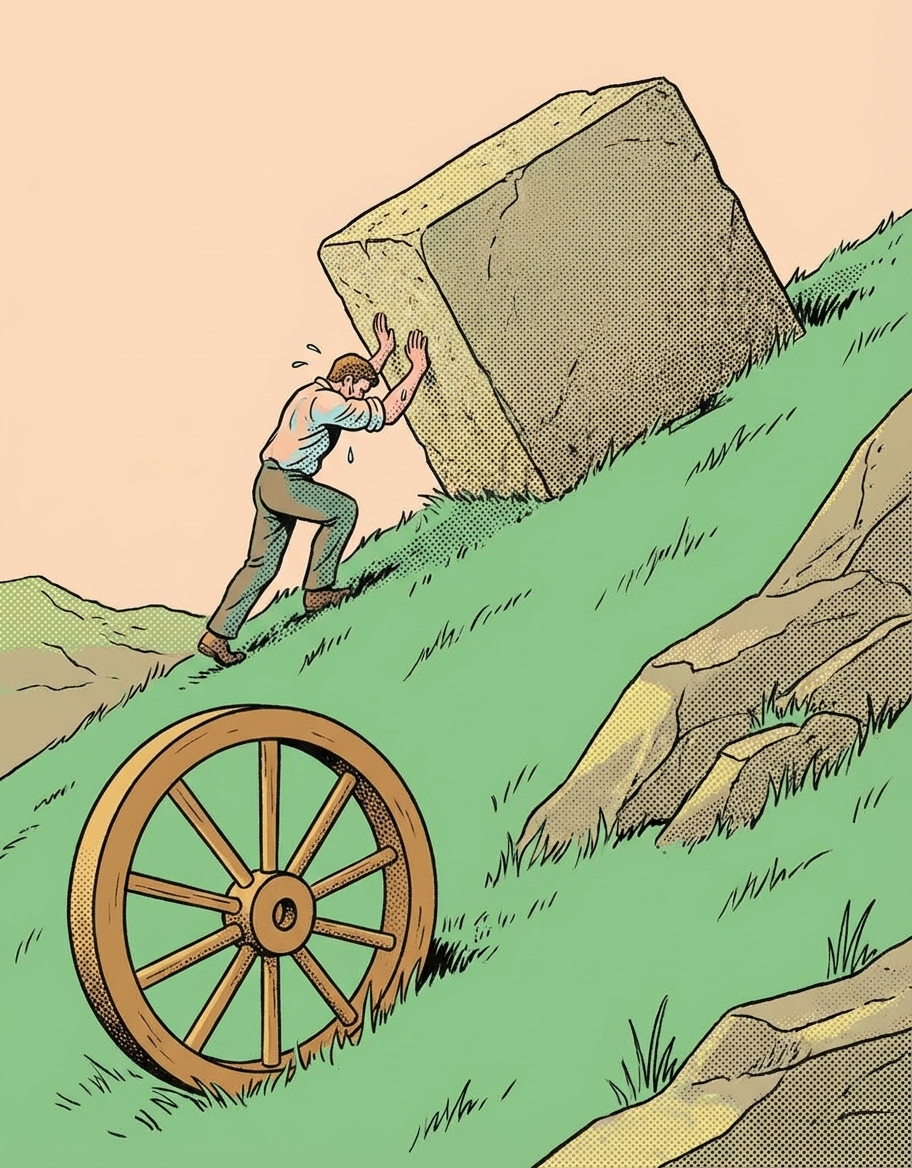
If the market tells you no, you have two choices. You can die, or you can pivot. This article explores the art of killing your darlings. It is one of the hardest things a creator has to do. You fall in love with your solution. You spent late nights coding it and designing it. You convinced your team it was the future. But if the market does not pull it out of your hands, it is not the right solution.
Product market fit is often found on the other side of a pivot. This does not always mean changing the entire company mission. It often means pruning features that provide no value or shifting the target customer profile. The article details how to approach this without emotion. It frames the pivot not as a failure of vision, but as a refinement of strategy. It is about listening to the data more than your own ego.
Successfully executing a pivot requires speed and decisiveness. Every day you spend debating whether to keep a failing feature is a day of runway burned. To understand the mechanics of how to strip your business down to its core value proposition, reviewing this piece is essential.
Addressing Weaknesses and The Unknown
#There are inherent weaknesses in the approach of rapid iteration and pivoting. The primary risk is a lack of cohesion. If a startup pivots too frequently, the team can lose faith in the leadership. They may feel like they are running in circles rather than building toward a singular vision. This is a valid concern. To address this, founders must over communicate the why behind the changes. Data must be the shield. If the team sees the same data the founder sees, the pivot becomes a logical conclusion rather than a whim.
Furthermore, there is the risk of false negatives. Sometimes a product fails not because the idea is bad, but because the distribution was poor. Addressing this requires a scientific approach to testing channels before blaming the product.
We also face significant unknowns in this process. We do not know if the next iteration will be the one that works. We do not know if the market will shift again by the time we rebuild. This uncertainty paralyzes many founders. They stay in the debate phase because it feels safer than the build phase. But in the startup environment, movement is always better than debate. You cannot steer a stationary ship.
The unknown is not a reason to stop. It is the very reason to move faster. By reducing the cycle time between an idea and market feedback, we reduce the risk of the unknown. We replace speculation with facts. We encourage every founder reading this to look at their current roadmap. Ask yourself what is being built to satisfy an internal desire versus what is being built to satisfy a desperate market need. The gap between those two things is where your work lies.