
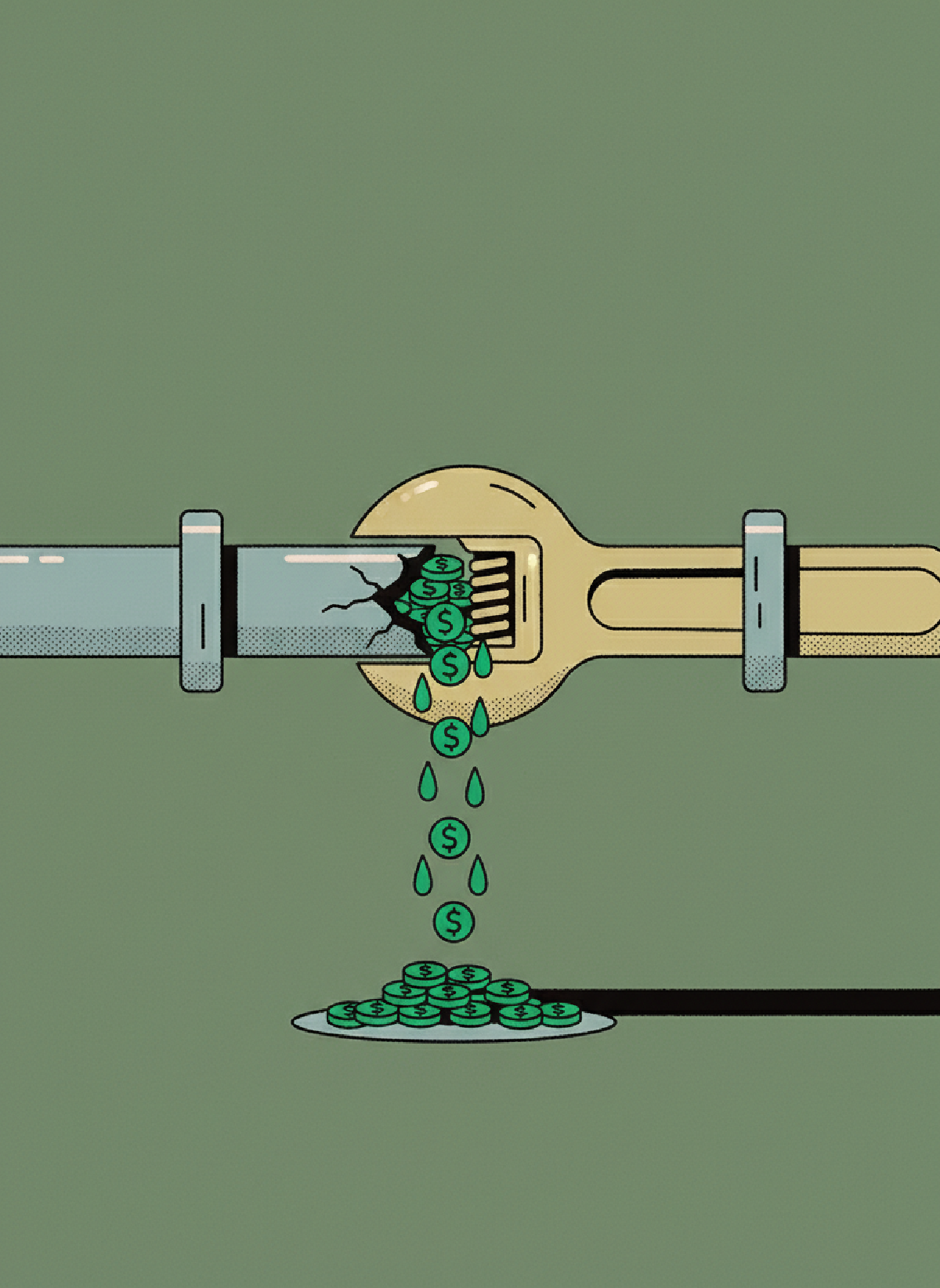

Building a startup is a series of calculated risks. The most significant risk any founder faces is the exhaustion of capital before reaching a sustainable milestone. We have recently explored several critical facets of financial management that every founder should understand. These topics include the psychology of spending, the mechanics of cash flow, and the discipline of auditing internal costs. The common thread is survival. To build something that lasts, you must protect the resources that allow you to continue working. This is not about being cheap. It is about being intentional with every cent that leaves your bank account.
The Psychology of Capital Preservation
#
In the early stages of a business, capital is your most precious resource. One of our recent discussions focused on the concept of treating every dollar like a prisoner of war. This means that once a dollar is in your possession, you should be extremely hesitant to let it go. You only release it if it is going to bring back more resources or provide a strategic advantage that ensures your survival.
Negotiation is a core skill here. Many founders assume that prices for software, rent, or services are fixed. They are rarely fixed. By adopting a mindset of scarcity, you force yourself to justify every expense. This approach prevents the slow leak of capital that often happens when a company feels flush with cash after a funding round or a big sale. You can find more about these tactics in our post about negotiating survival.

Profitability is a metric, but cash flow is a reality. A company can be profitable on paper while simultaneously going bankrupt because the timing of money coming in does not match the timing of money going out. This is often referred to as the silent killer of growing companies. If you land a massive contract but have to pay for the materials and labor 60 days before the client pays you, you have a cash flow gap.
Managing this requires a deep dive into your accounts receivable and payable. It involves understanding lead times and payment terms. Founders must be proactive in shortening the time it takes to get paid and lengthening the time they have to pay their own bills. This technical balance is what keeps the lights on during periods of rapid growth. You can learn more about managing these cycles in our guide on cash flow management.
The Discipline of the Financial Audit
#

Operational bloat happens slowly. It usually starts with a handful of small SaaS subscriptions that cost twenty dollars a month. Over a year, a growing team might sign up for dozens of tools that eventually overlap or fall out of use. A periodic financial audit is the only way to stop this bleeding. This is a systematic review of every single recurring expense to determine if it is still providing a positive return on investment.
An audit is not just about cutting costs. It is about visibility. When you know exactly where your money is going, you can make better decisions about where to reallocate it. If you find you are spending thousands on a marketing tool that no one uses, those funds can be redirected toward a developer or a sales initiative. For a breakdown on how to conduct this process, read more about the art of the financial audit.
Addressing Weaknesses in Financial Operations
#A primary weakness in many early stage companies is the lack of real time financial visibility. Founders often rely on end of month reports that are delivered weeks after the period has closed. By the time you see the data, it is already too late to change the outcome for that month. This lag creates a dangerous disconnect between operational actions and financial consequences.
To address this, founders should implement the following:
- Use automated accounting tools that sync daily with bank accounts.
- Establish a weekly burn review meeting to look at cash positions.
- Set strict limits on who can authorize new recurring subscriptions.
- Maintain a rolling twelve month cash flow forecast that is updated monthly.
Another common weakness is founder ego. It is easy to spend money on things that make the company look successful rather than things that make the company actually successful. This includes fancy offices or expensive branding before the product has found its market. The solution is to tie every significant expense to a specific, measurable outcome.
Movement Over Debate in Financial Decisions
#In a startup environment, you will often face unknowns regarding the return on investment for certain expenditures. You might not know if a specific software tool will actually save the team five hours a week. You might not know if a new marketing channel will yield a low cost per acquisition. There is a tendency to debate these items for weeks to avoid making a mistake.
However, movement is almost always better than debate. If a cost is identified as potential waste, cut it immediately. If the team finds they cannot function without it, you can turn it back on within minutes. The cost of debating a hundred dollar subscription for three hours of management time is far higher than the subscription itself.
Execution is the priority. The goal is to keep the business moving forward while keeping the financial hull watertight. Do not let the fear of a small mistake prevent you from making the large, necessary moves that preserve your runway. Every day you spend debating is a day of burn that you can never recover. Focus on doing, measuring the results, and adjusting based on the facts you uncover along the way.