


You would rather write code than write a LinkedIn post.
You would rather audit your supply chain than attend a networking mixer.
This is the default setting for many founders. You built a product because you saw a problem that needed solving. You did not build a product because you wanted to be famous. In fact, the idea of being the face of the brand likely makes you nauseous.
So you hide.
You create a corporate entity. You use the royal “We” in your emails even though it is just you sitting in a spare bedroom. You build a sleek logo to act as a shield between you and the market.
This feels safe. It feels professional.
But it is also expensive.
In the early stages of a business, anonymity is a tax. When nobody knows who you are, trust is expensive to acquire. You have to pay for it with marketing dollars and aggressive sales tactics.
But there is a different way to view this dynamic. We need to stop looking at “branding” and “networking” as vanity metrics for extroverts. We need to look at them as efficiency algorithms for your business.
The Cost of the Corporate Mask
#There is a prevailing belief that to be taken seriously, you must look big. You want to appear like an institution.
However, in the current market, the opposite is often true.
Institutions are distrusted. People are skeptical of faceless corporations. They assume there is a committee of lawyers behind every press release. Conversely, people inherently trust other people. They trust craftsmanship. They trust a founder who is willing to put their name on the line.
When you hide behind a logo, you are removing the most potent asset you have. Authenticity.

The Founder Brand: Why Hiding Behind a Logo Is Costing You Money
Your story, your struggle, and your specific domain expertise are what differentiate you from the incumbents. The incumbents have more money than you. They have more staff than you. But they cannot be you.
If you remove the founder from the brand, you are voluntarily entering a commodity market. You are competing on features and price rather than trust and vision.
We have to ask why we are hiding. Is it strategic? Or is it fear?
Engineering the Alliance
#Once we accept that we must be visible, we run into the next hurdle.
Networking.
The word itself conjures images of warm white wine, awkward handshakes, and people trying to shove business cards into your pocket. If you are a “Quiet Founder” or an introvert, this environment is a nightmare. It feels transactional and fake.
But that is a specific type of bad networking. That is not how business is actually done at a high level.
We need to reframe networking as alliance building. It is not about how many people you know. It is about how many people trust you enough to put their own reputation on the line for you.

Networking for the Quiet Founder: How to Build Alliances Without Selling Your Soul
For the quiet founder, the advantage lies in depth rather than width. You do not need to work the room. You need to find the three people in the room who are actually doing interesting work and have a substantive conversation with them.
This is about value exchange. It is about asking questions rather than pitching solutions. When you approach a connection with curiosity rather than a sales deck, you lower the defenses of the other person. You move from being a vendor to being a peer.
Riding the Whale
#Now that we are building relationships, we need to look at leverage.
A common mistake small founders make is trying to compete directly with the giants of their industry. They try to steal customers one by one.
This is a war of attrition you will likely lose.
A better strategy is the Asymmetric Alliance.
In nature, there are small fish that attach themselves to whales. They do not fight the whale. They provide a service the whale cannot perform for itself, like cleaning parasites, and in exchange, they get a free ride and protection.
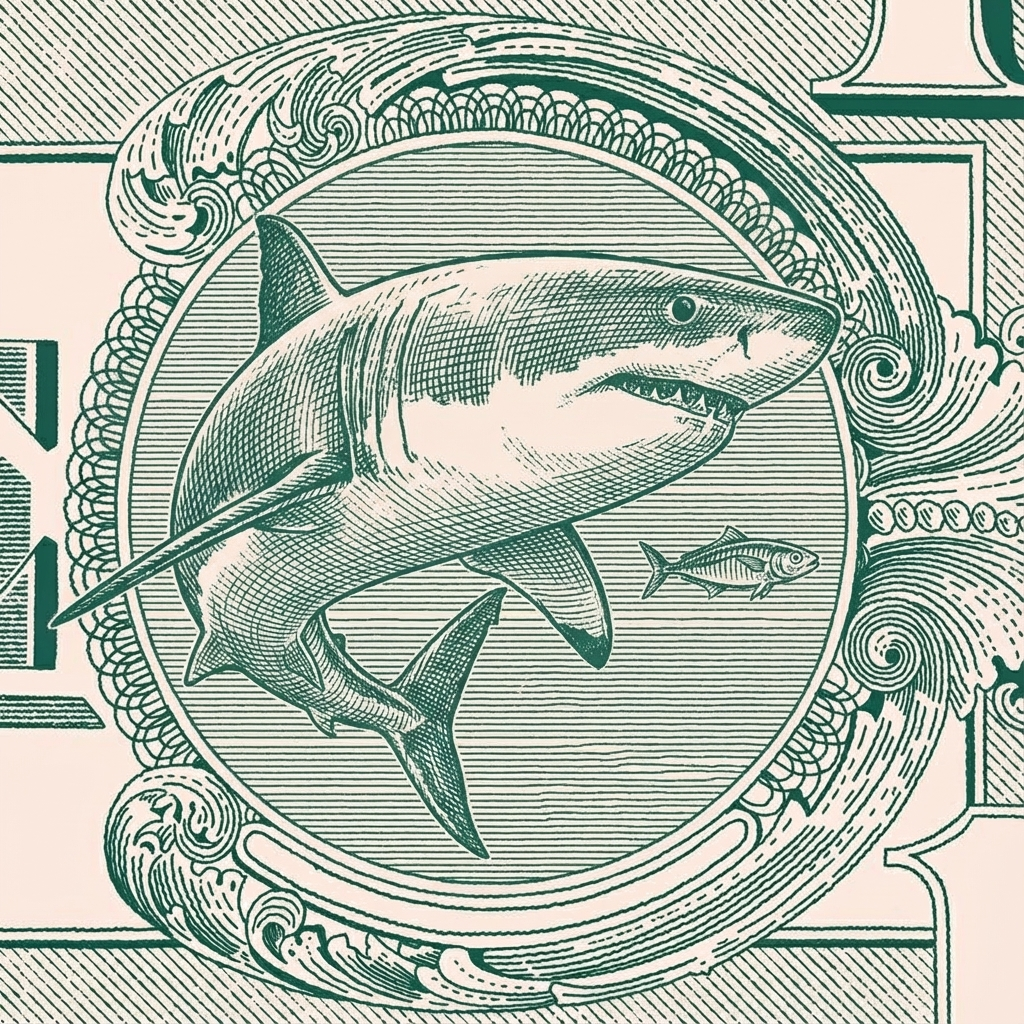
The Art of the Asymmetric Alliance: Riding the Whale Instead of Fighting It
Large corporations are whales. They are slow. They are bureaucratic. They have gaps in their product lines that they cannot fill because the market is too small for them to care.
This is your opportunity.
Instead of trying to beat them, you build the integration they need. You solve the edge case their support team ignores. You build a relationship where you become the recommended partner for their overflow.
This requires you to check your ego. You are not the main character in this specific narrative. You are the enabler. But being the enabler for a billion dollar company is a very profitable position to be in.
The Scientific Method of Rejection
#The final piece of the reputation puzzle is how you handle the negative signal.
No.
Founders often take rejection personally. A decline feels like an indictment of your character or your intelligence. This fear of “No” is what keeps people hiding behind logos and avoiding networking events.
But in science, a negative result is just data. It tells you where the boundary is.

The Data of No: Why Rejection Is the Most Valuable Asset You Can Acquire
When an investor passes or a partner declines an alliance, they are giving you a coordinate. They are telling you that your proposition does not fit their current model.
If you treat “No” as emotional damage, you stop moving. If you treat “No” as a data point, you calibrate. You ask why. You adjust the pitch. You change the feature set.
The quiet founder has an advantage here. Because you are less likely to rely on charisma to smooth over cracks, you have to rely on the substance of the offer. When you get a rejection, it usually points to a structural issue you can fix.
The Asset of You
#We have covered a lot of ground.
We looked at the danger of hiding behind a corporate mask. We explored how to network without feeling like a used car salesman. We discussed leveraging the power of larger companies and reframing rejection as data.
None of this requires you to change your personality. You do not need to become the loud extrovert at the party.
You just need to recognize that your reputation is an asset class. It is a piece of machinery that requires maintenance and investment just like your code base or your supply chain.
When you stop viewing these activities as distractions and start viewing them as engineering challenges, they become manageable.
You can build a brand quietly. You can build it with precision. But you cannot build it in the dark.