
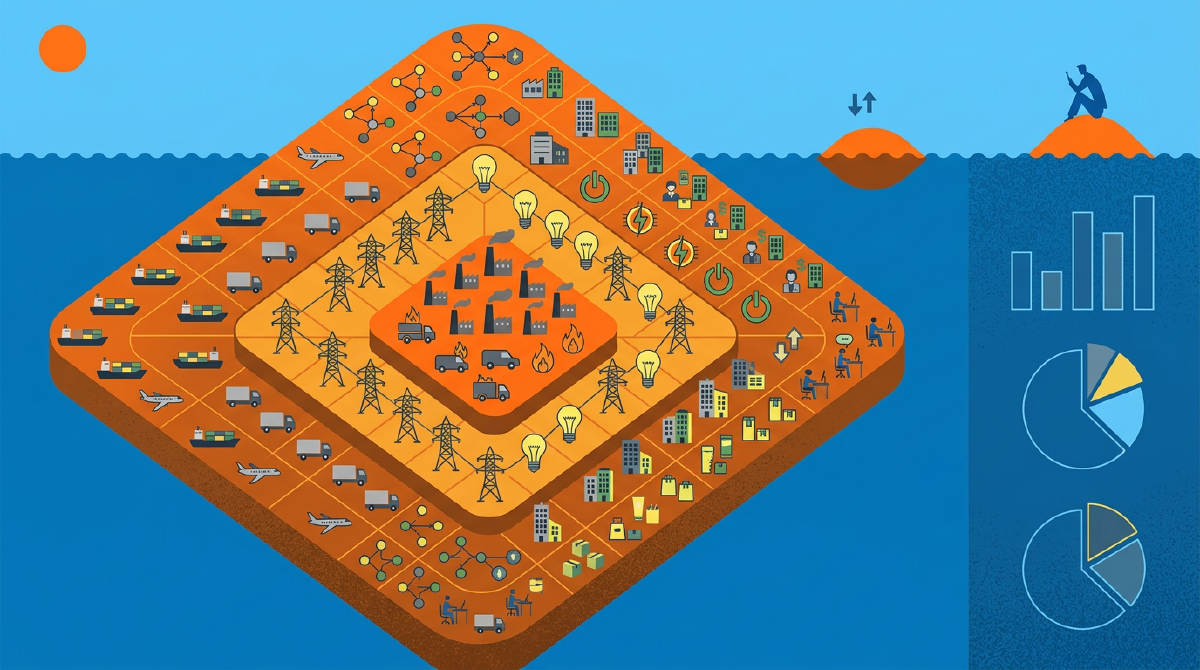

The transition to a sustainable economy is not just a moral debate. It is a massive logistical challenge that requires precise data and rigorous accounting. For many years, companies relied on vague sustainability reports that lacked actual financial depth. This era of marketing fluff is ending because regulators are demanding real numbers. Kara enters this space as a technical solution for a very specific and difficult problem. They focus on the financial sector, which often struggles to calculate the emissions of the companies they fund. This concept is known as financed emissions.
Automating the Carbon Accounting Pipeline
#Kara solves the data gap by moving away from manual entry and estimation. The platform uses a dual approach to measure carbon footprints: activity-based and spend-based accounting. Most traditional methods rely on once a year surveys that companies send to their vendors. This is slow and often inaccurate. Kara changes this by connecting directly to the tools businesses already use to manage their money. By integrating with accounting software like Xero and QuickBooks, the platform can see exactly what is being purchased in real time.
This integration allows for a much faster data collection process. The company claims this method can be up to ten times faster than manual reporting. It converts every dollar spent into a carbon equivalent based on the most recent emissions factors. This is a significant shift for asset managers who need to report on their entire portfolio. Instead of waiting months for a report, they have a live view of their environmental impact. It allows them to manage Scope 1, 2, and 3 emissions with the same rigor they apply to financial profits.
The Product Landscape and Market Dynamics
#The team at Kara has identified a massive bottleneck in the financial industry. Banks, insurance firms, and asset managers are now under pressure to meet Net Zero commitments. However, they do not always have the internal expertise to build complex carbon models. The platform acts as the technical infrastructure that these institutions lack. It provides a way to aggregate data from many different portfolio companies into a single fund level view. This roll up capability is essential for firms managing hundreds of separate investments.
Their market is driven by a wave of new global regulations. Frameworks like the Sustainable Finance Disclosure Regulation in Europe and the SEC rules in the United States are making transparency mandatory. Kara positions itself not just as a tool for environmentalists, but as a compliance tool for risk officers. The market for this kind of data is expanding rapidly as institutional investors demand better ESG metrics. Firms that cannot provide audit ready data are finding it harder to raise capital. Kara addresses this by providing a clear audit trail for every data point generated.
Comparing Kara to Legacy Reporting Solutions
#To understand the value of this platform, we must look at how firms currently handle this work. Many organizations still rely on massive spreadsheets and external consultants to calculate their carbon footprint. This manual process is prone to error and is incredibly expensive to maintain. It also creates a static snapshot that is often outdated by the time it is published. Kara replaces these manual workflows with a dynamic software environment.
- Manual Spreadsheets: These require hundreds of hours of data entry and lack built in validation.
- Generic ESG Platforms: These often focus on high level qualitative scores rather than granular carbon data.
- Consulting Projects: These provide expert advice but do not offer a scalable way to track data every month.
- Automated Data Pipelines: Kara falls into this category by leveraging direct API connections to financial records.
- Audit Readiness: Unlike a standard spreadsheet, the platform provides a digital evidence trail for every calculation.
This comparison shows a clear shift toward software as a service in the sustainability space. Founders in this niche are moving away from being service providers to being infrastructure builders. This allows for a level of scale that was previously impossible. It also makes the data more defensible when it is reviewed by third party auditors.
Strategic Scenarios for Implementation
#There are several ways a financial institution might deploy this technology within their existing operations. It is not just about the end of year report. It is about integrating climate data into the daily decision making process of the firm. Entrepreneurs in this space should look at these use cases to understand how data becomes valuable. When carbon data is accessible, it changes how capital is allocated.
- Private Equity Due Diligence: Using the platform to assess the carbon risk of a target company before an acquisition.
- Bank Underwriting: Incorporating carbon intensity scores into the credit risk assessment for new corporate loans.
- Insurance Pricing: Evaluating the climate transition risk of a client to better price insurance premiums.
- Limited Partner Reporting: Providing transparent and real time carbon metrics to the investors who fund the firm.
- Decarbonization Tracking: Monitoring whether a portfolio company is actually hitting the reduction targets it promised.
These scenarios illustrate how carbon accounting is becoming a core part of financial risk management. It is no longer a separate department in the basement of a large building. It is becoming a data layer that sits underneath every transaction. For a startup, this means their product must be reliable enough to support high stakes financial decisions.
Addressing Operational Weaknesses and Data Challenges
#No startup is without its challenges, and Kara operates in a particularly difficult technical field. The primary weakness of any spend based carbon accounting tool is data quality. If a company labels an expense incorrectly in their accounting software, the carbon calculation will also be wrong. This creates a garbage in, garbage out risk that can undermine the credibility of the reports. To address this, the platform must implement rigorous data validation layers and anomaly detection algorithms.
Another challenge is the reliance on third party emissions factors. These factors are constantly changing as the science of carbon accounting evolves. If Kara does not update their database frequently, their reports could become obsolete or inaccurate. They can mitigate this by maintaining strong partnerships with climate research organizations and automating their database updates. Furthermore, the platform must navigate the fragmented landscape of global regulations. Keeping the software compliant across multiple jurisdictions requires a massive and ongoing engineering effort.
The Power of Movement over Theoretical Debate
#In the world of climate tech, there is a lot of talk about the perfect way to measure an atom of carbon. Many people spend years debating the nuances of different methodologies without ever shipping a product. Kara stands out because they have chosen to build and move rather than wait for a global consensus. Building a platform that works today is more valuable than waiting for a perfect solution that may never arrive. This bias toward action is what separates successful startups from academic projects.
Critics might argue that spend based accounting is too high level for perfect accuracy. While that may be true, it provides a functional baseline that is far better than having no data at all. The act of collecting and organizing this data creates momentum within a firm. It forces people to look at their operations through a different lens. As the platform grows, the data will naturally become more granular and more accurate. This evolutionary approach is the only way to tackle a problem as complex as global climate change.
Founders can learn a lot from this strategy. Do not wait for the perfect data set or the perfect regulatory environment. Build the infrastructure that helps people take the first step. Kara is doing the hard work of building the pipes for a new kind of financial system. By focusing on utility and auditability, they are creating a foundation for real change. This is the kind of remarkable building that creates long term value in a world that is tired of empty promises.
Original content used for this article can be found at: https://joinkara.com/