

Emergency medical services often rely on tools that have not changed significantly in decades.
Founders looking at the medical device space often face a specific hurdle. They must improve patient outcomes while fitting into rugged, fast-paced workflows. HeadStrait Labs is currently tackling this challenge within the trauma care sector. They are addressing the risks associated with spinal immobilization during transport.
Smart Immobilization Mechanics
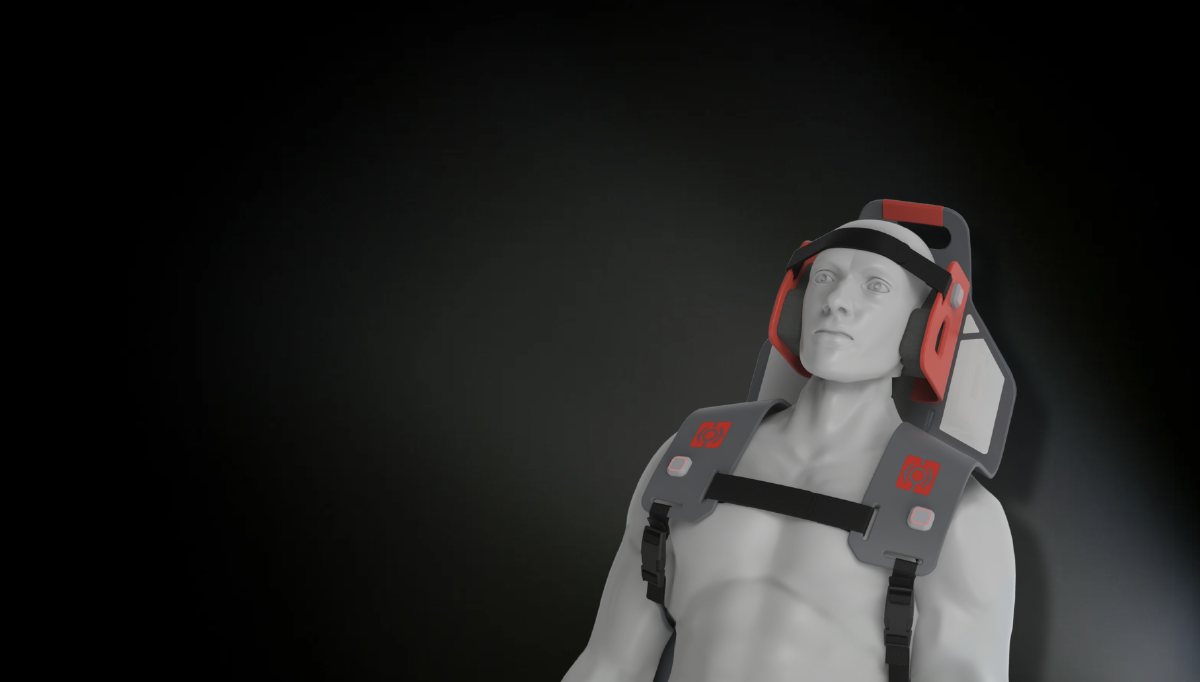
#The core offering from HeadStrait Labs is the EVAC-1. This is a head and neck stabilization splint. However, it differentiates itself from standard cervical collars by integrating digital monitoring.
The device utilizes a system called SMARTmotion. This technology embeds sensors directly into the splint. These sensors track patient movement in real time. If the patient’s head or neck shifts during transport, the care team receives an immediate alert.
This moves the process from physical observation to data-driven monitoring. It aims to prevent secondary spine injuries. These injuries occur in roughly 25% of cases due to inadequate stabilization. The device also records data for post-event analytics. This allows medical directors to review the quality of care throughout the pre-hospital journey.
Targeting the Golden Hour
#The primary market for this technology is Pre-Hospital Emergency Care. This includes civilian EMS, fire departments, and hospital-based trauma teams.
The startup focuses on the “golden hour.” This is the critical window following a traumatic injury where prompt treatment has the highest likelihood of preventing death.
They also target military medicine. Combat medics require tools for extrication in hostile environments. The EVAC-1 is designed to be compact and disposable to meet this need.
There is a financial component as well. Healthcare systems spend an estimated $102 billion annually on care associated with secondary spine injuries. Reducing this number presents a clear value proposition to insurance providers and hospital networks.
Moving Past the Status Quo
#To understand the position of HeadStrait Labs, you have to look at the alternative. Standard cervical collars often fit poorly. In some scenarios, providers resort to makeshift solutions like duct tape to secure a patient.
The EVAC-1 competes against these analog methods. It offers a universal design intended to fit a wide range of patients without the guesswork of sizing.
This is a classic example of a startup identifying a gap in a mature market. The incumbent solution is cheap but low-tech. The startup solution adds cost but reduces long-term liability and improves clinical outcomes.
The Hardware Challenge
#For entrepreneurs reading this, HeadStrait Labs represents a complex business model. They are not just shipping software. They are operating at the intersection of HealthTech and Robotics.
This requires competency in several difficult areas:
- Manufacturing physical goods that must be sterile and reliable.
- Developing sensor technology and software integration.
- Navigating FDA regulations and medical device classifications.
- Selling to government entities and hospital procurement departments.
We should ask questions about this approach. How does a disposable hardware startup manage unit economics? The device is single-use, but it contains electronics. This raises questions about waste and cost per unit compared to a plastic collar.
Furthermore, adoption cycles in EMS are notoriously slow. Changing the behavior of a paramedic who has used standard collars for twenty years is a significant hurdle. We will be watching to see how their data-driven approach influences adoption rates in such a traditional field.