
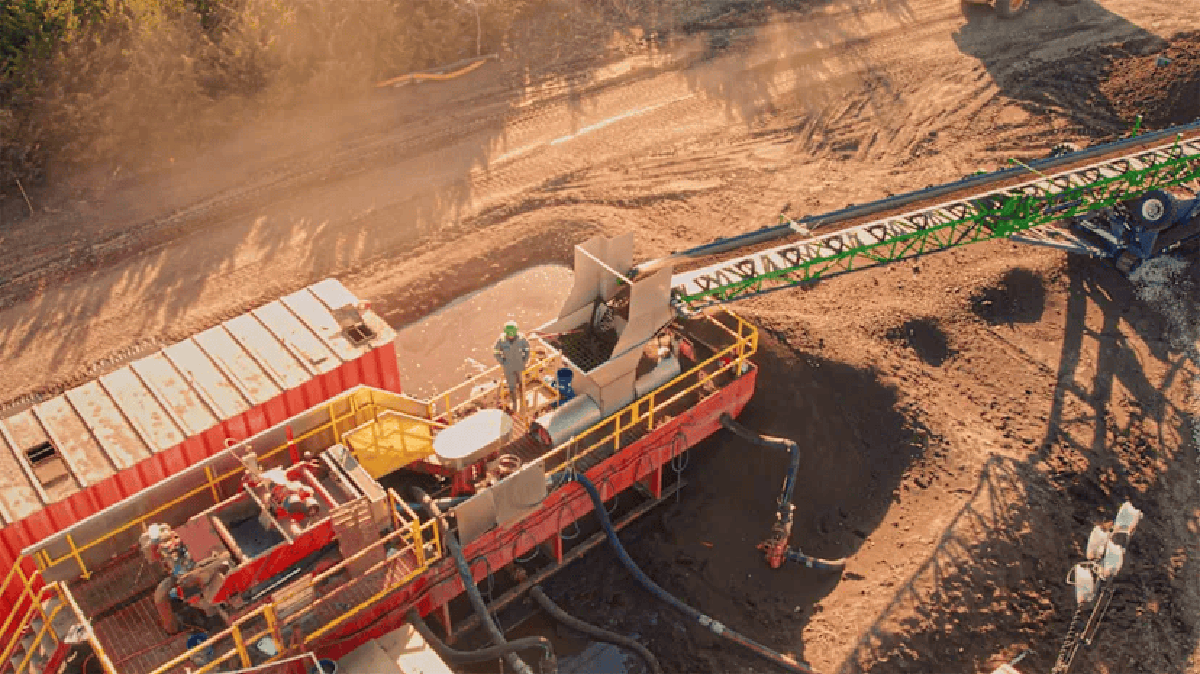

One of the most dangerous traps for a founder is the allure of the purely digital. We look at screens, we move pixels, and we assume that building a business requires clean hands and a laptop. But the physical world is where the messy, difficult, and truly impactful problems often live. If you are looking to build something that lasts, sometimes you have to look down. Way down.
Vaulted Deep is a climate technology company that has taken a very literal approach to the concept of deep tech. They are not building an app. They are injecting organic waste miles underground to lock away carbon for ten thousand years. For the entrepreneur reading this, Vaulted Deep represents a masterclass in identifying a tangible problem and repurposing existing heavy industry knowledge to solve it.
This is not a theoretical exercise in saving the planet. They are currently operational and moving mass. Let us look at how they are doing it and what you can learn from their architecture.
The Mechanics of Slurry Injection
#The core solution offered by Vaulted Deep is known as Biomass Carbon Removal and Storage. In the industry, we call this BiCRS. The concept is straightforward even if the engineering is complex. Organic waste naturally decomposes. When food waste, manure, or sewage sludge rots, it releases methane and carbon dioxide into the atmosphere. This is the baseline problem.
Vaulted Deep intercepts this process. They take that organic feedstock and process it into a carbon rich slurry. Instead of allowing it to rot in a landfill or spreading it on a field, they inject it into deep geological formations. We are talking about depths over a mile underground.
Once injected, the carbon is trapped. The geological pressure and temperature ensure that the carbon remains sequestered for millennia. This is a permanent removal solution. It turns a liability, which is rotting waste, into an asset, which is a carbon credit.
Repurposing Legacy Tech
#There is a lesson here for every founder regarding the origin of your tools. Vaulted Deep did not invent deep well injection from scratch. They spun out of Advantek Waste Management in 2023. They looked at the technology used by the oil and gas industry—specifically the methods used to inject fluids into rock formations—and asked a different question.
Instead of using that technology to extract hydrocarbons, they used it to put carbon back. This is a critical insight for entrepreneurs. You do not always need to invent the wheel. Sometimes you just need to turn the wheel in the opposite direction. By leveraging established technology, they bypassed years of R&D risk that typically kills hardware startups. They moved straight to execution.
A Dual Sided Market Strategy
#Most startups struggle to find one customer base. Vaulted Deep has positioned itself to serve two distinct markets simultaneously. This increases complexity but also increases revenue stability.
First, they serve the waste producers. Municipalities, agricultural operations, and industrial sites have a massive problem with biosolids and manure. It is expensive and hazardous to manage. Vaulted Deep provides a disposal service that mitigates environmental risk. This is the feedstock market.
Second, they serve the carbon credit buyers. This is where the economics become interesting. Because their process is measurable and permanent, the credits they generate are high quality. They have already secured offtake agreements with massive players like Microsoft and Google. Microsoft alone signed up for nearly five million tonnes of removal.
For a founder, this validates the market. When the largest companies on earth are writing contracts for a product, you know the demand is real. It is not speculative.
The Heavy Logistics of Atoms
#We must look at the weaknesses in this model. When you deal with software, your marginal cost of replication is zero. When you deal with manure slurry, your marginal cost is significant. This is a heavy logistics business.
Vaulted Deep has to move physical mass. They need trucks. They need pipelines. They need to be located geographically close to the waste source or the injection site. The cost of transportation can quickly eat into unit economics. If a startup cannot optimize the supply chain, the physics will win, and the business will fail.
Furthermore, this model is location dependent. You cannot just spin up an instance in the cloud. You need specific geological formations that can accept the slurry. This limits scalability compared to a SaaS product. However, it also creates a massive moat. Once you control the injection well and the local waste contracts, it is incredibly difficult for a competitor to displace you.
Unknowns and the Bias for Action
#There are always unknowns in deep tech. The regulatory environment for carbon removal is still being written. Permitting for injection wells involves federal and state agencies. It is a bureaucratic maze that would scare off most wantrepreneurs.
There is also the question of long term monitoring. While the science suggests the storage is permanent, the protocols for verifying that over decades are still maturing. A cynical founder might wait for the regulations to settle.
Vaulted Deep is not waiting. They are moving. They are operating facilities like their site in Hutchinson, Kansas, right now. This is the most important takeaway. Movement is always better than debate. You can sit in a room and argue about regulatory frameworks, or you can go to Kansas and start injecting carbon.
The companies that win are the ones that accept the unknowns and build anyway. They force the market and the regulators to catch up to them. Vaulted Deep is digging holes while others are digging through paperwork.